

Beneath the calm surface of the oceans lies a world of incredible depth and mystery. The deep ocean filled with wide underwater plains, tall mountain ranges, and steep trenches is still full of secrets that amaze scientists and explorers. In this blog, we’ll take a fascinating journey into the deep sea and discover the unique creatures that live in this strange and amazing place.
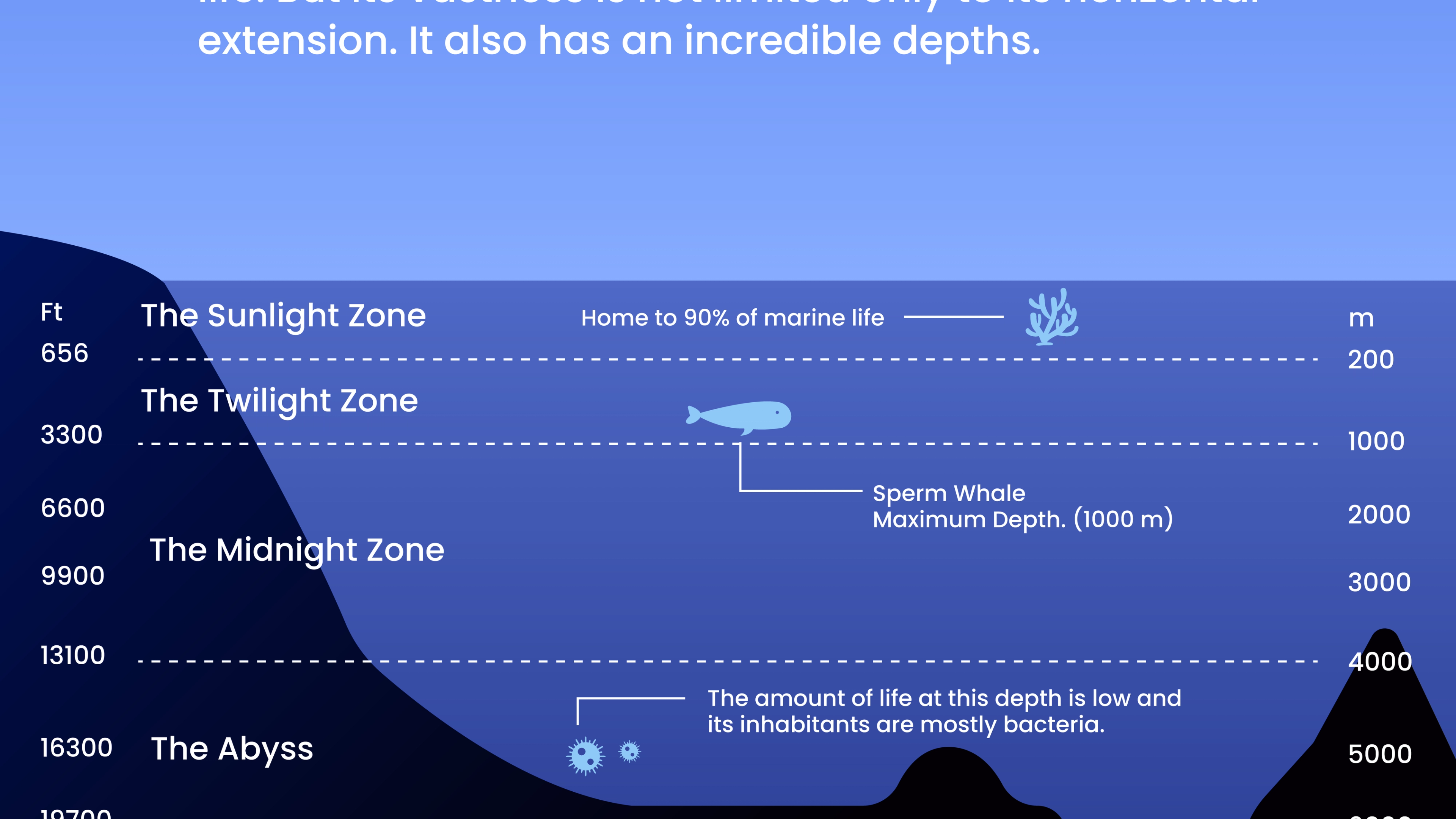
To understand just how vast the deep ocean is, consider its size. On average, the ocean is about 3,800 meters (12,467 feet) deep, but in some places, it goes much further. The Mariana Trench in the western Pacific Ocean reaches an incredible depth of 10,994 meters (36,070 feet), making it the deepest spot on Earth.
As we travel deeper into the ocean, the conditions become extreme. The pressure increases quickly, reaching levels over 1,000 times greater than at the surface. Sunlight cannot reach these depths, leaving them in constant darkness. Yet, despite these challenges, life still finds a way to exist and even thrive.
Many people think the deep ocean is empty, but it’s actually full of life. Creatures here have developed special abilities to survive, like glowing in the dark a skill called bioluminescence. This glow helps them find food, communicate, or hide from predators.
One famous deep-sea animal is the anglerfish. The female has a glowing lure on her head that she uses to attract prey. Other interesting creatures include deep-sea squids and octopuses that use color and texture changes to blend into their surroundings or send signals in the dark.
The abyssal plains—flat areas deep under the sea—are home to many animals that live off particles that drift down from the surface. Deep-sea corals grow in these areas, forming habitats for crabs, shrimp, sea stars, and more.
As we go deeper, we find hydrothermal vents and cold seeps—underwater springs that release mineral-rich fluids. In these places, bacteria use chemicals, not sunlight, to make energy. These bacteria support whole ecosystems, including giant tube worms, eyeless shrimp, and strange clams that live in total darkness.
In ocean trenches like the Mariana Trench, we find some of the most extreme and unexplored places on Earth. Here, scientists have seen amazing creatures like the giant squid and amphipods tiny crustaceans that grow unusually large in these deep, predator-free zones. These areas may also help us learn about life on other planets, since they show how life can exist in harsh environments.
With each new expedition, we learn more about the deep ocean, its history, and the strength of life itself. Technology and human curiosity continue to push us further into this mysterious world.
The deep ocean also plays a key role in keeping our planet healthy. It helps control the climate, moves nutrients around, and supports a wide range of species. Protecting these ecosystems is important not just for the creatures that live there, but for life on Earth as a whole.
Studying deep-sea life may also help us solve problems here on land. Their survival skills could inspire new ideas in medicine, technology, and more.
So let’s keep exploring the deep ocean, celebrating its wonders and protecting its future. Every dive brings new discoveries and reminds us of the incredible life hiding in the depths of our planet’s last great frontier.