

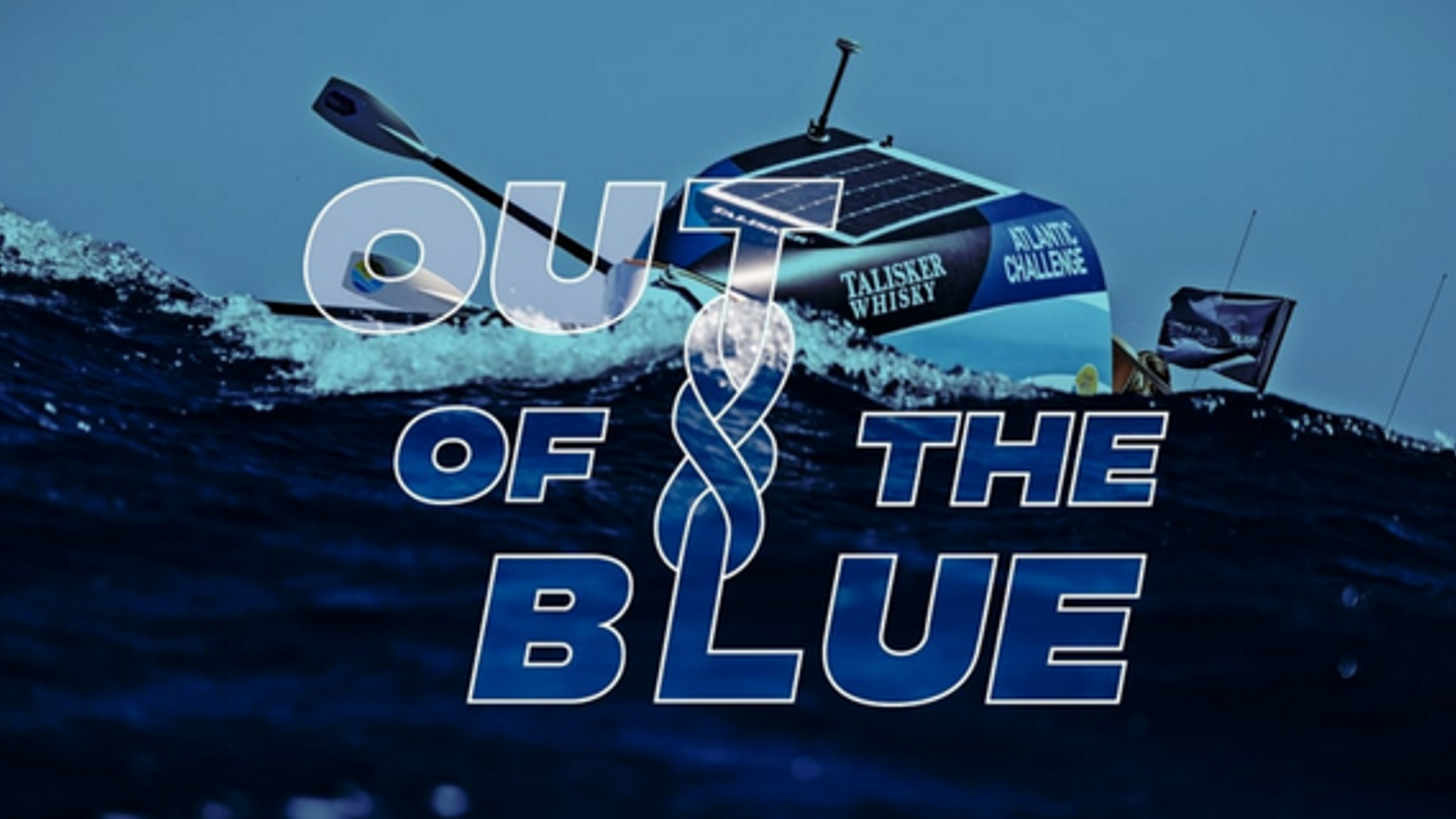
3000 Sea Miles. 1.5 Million Oar Strokes. Rowing for 2 Hours — Sleeping for 2 Hours. All Day, every Day. 40 Days of Racing Endurance:
The Talisker Whiskey Atlantic Challenge
Four young men will embark on the adventure of a lifetime in 2023, daring a grueling 3000 miles across the Atlantic in the world’s toughest rowing race, the Talisker Whiskey Atlantic Challenge. From the Canary Islands on the east coast of Africa to Antigua and Barbuda in the Caribbean, the world-famous racing event pits human endurance, courage, and strength of will against the raw elements of nature.
Brave ocean rowing teams or solo players of every age and ability make the arduous crossing through mighty storms, monster waves, and blinding sunshine, supported solely by solar power, limited supplies, and team morale — while raising funds for the charity of their choice.
Team Out of the Blue is participating in the Talisker Whiskey Atlantic Challenge on behalf of an environmental cause with the unique task of collecting essential data to save coral reefs.
Reef Support and Team out of the Blue have come together to unleash the full potential of marine conservation, citizen science, and education.
The team will use a satellite-informed GIS or Open Ocean Data Tool and on-the-ground data validation equipment — including the Windie360 handheld anemometer- to take frequent readings along the way. Their findings will upload to a pooled database of public knowledge used to inform and assist scientific studies dedicated to finding solutions for repairing and reversing coral reef damage — caused primarily by climate change and other human-enabled factors.
Rowing Race Team Take on The Talisker Whiskey Atlantic Challenge
Amir Anwar-Hameed, Sergio Dubram and Johannes, and Marko Rehbein were inspired by Jasmine Harrison’s courageous world record at the age of 21 for the youngest woman to row solo across the Atlantic. The four friends spontaneously formed Team Out Of The Blue to take on the challenge of willpower by testing their strength, spirit, and courage against the unpredictable and wild forces of nature.
The competitors hope to win their class in the 2023 rowing race in just 40 days on a superbly streamlined and fitted Rannoch 45 Elite ocean rowing boat. And one of their goals is to spread global awareness, in partnership with marine conservationists and scientists, Reef Support, about the need for recording open ocean data that delivers insights into how we can save our dying coral reefs.
Remarkably, the four rowing race entrants are neither professional nor experienced rowers, just young guys with regular jobs, big dreams, and a daring sense of adventure. The intrepid team is eager to embrace the Talisker Whisky Atlantic Challenge, hoping to journey beyond the limitations of what humans usually believe possible.
Preparing for the Toughest Rowing Race on Earth
Preparing for a 4500-kilometer (3000 miles) rowing race across the Atlantic Ocean is the first challenge the four rowers face. They have almost a year and a half to train for the event. Once they have taken possession of their ocean rowing boat, they’ll be required to prove to the organising officials that they can row for 120 hours unassisted — including overnight. Furthermore, applicants will need to study theory and navigation for open sea rowing as part of the stringent entry requirements that the event’s producer, Atlantic Campaigns, demands — for the safety and security of participants.
Each team will row more than 1.5 million oar strokes during a race. The rowers plan to work in shifts called ‘2 hours on, 2 hours off, meaning they will row for 2 hours and then sleep for 2 hours around the clock for 40 days non-stop — weather permitting.
Team Out of the Blue will focus on balancing muscle strength, cardio workout, and recovery as preparation for the challenge — which is not only physical but a nail-biting test of mental endurance. Days at sea with constant movement, confined quarters, on limited rations, and enduring constant physical exertion, only exacerbated by seasickness, the blinding sun — and extreme weather at sea — can take their toll emotionally and mentally.
Recovery from a long rowing shift is possible with proper stretching and nutrition. Marko is already rowing at the Rowing club Allemania von 1866 in Hamburg 3 times a week. Meanwhile, Amir is cycling, and Sergio is a gym coach in Geneva, so he’s always active.
They are training themselves mentally too by deliberately enduring uncomfortable situations like getting up early in the morning for rowing in freezing weather and taking cold showers. Importantly, members have to ensure that the team dynamic is rock solid. The team discusses each other’s strengths, weaknesses, and habits. The combination of seasickness and exhaustion often leads to tense situations on board, so a team that understands how everyone reacts when things get tough is crucial.
The team believes they can win the race with clear heads, good nutrition, and focused strategy above physical prowess. Once a month, all the Talisker Whiskey Atlantic Challenge teams meet on Zoom to discuss safety, training, life on board, and mental health, and participants can ask questions from past rowers — and learn about all the aspects of the race.
Atlantic Campaigns have a dedicated safety team and strict regulations for the boats and equipment used. Every September, three months before the race, the group participates in a pre-inspection where they evaluate the chosen equipment and boat. In this way, the organizer can guarantee safe and fair competition.
The team will be racing in an R45 Elite ocean rowing boat, upgraded with more durable and sustainable materials than the standard R45. The R45 is a discontinued model — but a second-hand vessel, revamped for the long voyage, has been requisitioned.
Ocean rowing boats are unique because they have everything needed to survive for 60 days unsupported on the ocean, including safety equipment, navigation, watermaker, solar panels, batteries, toilet buckets, underwater parachutes, and plenty of dehydrated food.
The most vital equipment is the watermaker which can turn 30 liters of ocean water into fresh water. Each rower must have at least 10 liters of water per day — for drinking and rehydrating their supplies of dehydrated food. If the system breaks, hand-pumping also works.
The auto-rudder is another crucial piece of equipment that guides the boat, connected to the GPS. However, rowers must be able to navigate without GPS and steer manually without assistance.
The power on the boat comes from solar panels and batteries that power the navigation and the communications system, including satellite internet and phones. Teams can send back footage to shore to be used in social media and keep friends, family, and partners up to date using a sat-com system.
Another essential piece of equipment is the Para-Anchor — an underwater parachute used to keep the boat in place during big waves and strong currents.
Like their partners at Reef Support, Team Out Of The Blue promotes a connection between social and environmental awareness by highlighting the need for those concerned about the damaging effects of climate change to pitch in and make an active scientific contribution.
Open Ocean Data Provides Solutions to Save Coral Reefs
Coral reefs are a breeding and nursery ground for a quarter of all known marine life.
Open Ocean Data provided by satellites and on-location readings analyzed by artificial intelligence and interpreted in new ways by scientists can provide novel solutions to save coral reefs from the harmful effects of rising sea temperatures, increased wind speeds, and increasing acidity caused by climate change — and other harmful effects like chemical pollution and sediment from coastal development.
An undeniable fact is that mass coral bleaching has caused a massive decline in coral reef habitats, and 50% of our coral reefs have died in the last 30 years — with 90% predicted to vanish by the year 2050 if more of us do not take action soon.
Team Out of the Blue rowers will monitor ocean conditions using a GIS tool (geographical information system tool) called Open Ocean Data, derived from satellite data provided by the Copernicus Marine Service. The software, developed by Reef Support to gather data surrounding ocean conditions, empowers individuals and organisations with dynamic insights, aiding the development of solutions to save coral reefs.
The team will record sea conditions during the rowing race and employ the Windie 360 professional anemometer between non-stop two-hour-long rowing shifts to provide ground truth validation to the GIS tool developed by Reef Support.
Open Ocean Data delivered to Reef Support’s innovative open community science platform enables advanced AI studies into environmental conditions proven to cause coral bleaching and the current demise of our oceans. The newly developed GIS tool is a user-friendly, free-to-use Open Ocean Data tool that can track and predict local ocean conditions, including sea temperatures, salinity, and chlorophyll levels.
The resulting satellite data is produced in simple graph format and made available to independent organisations creating new knowledge about the interaction of the marine environment and coral reefs. And can be shared publicly with the community or used to alert local governments to fluctuating ocean climate conditions.
Supporting Reef Rangers
Reef Support runs an exciting global training program that teaches students how to become contributing citizen scientists — and advanced scuba divers — who can map and monitor reefs, regrow coral, and provide reliable scientific data for future predictions.
There are still a few course openings on the beautiful protected island of Providencia in Columbia, the unique animal kingdom of Madagascar in the Indian Ocean — and the azure waters of Lombok, Indonesia. Book your place asap to become a Reef Ranger and a contributing scientist gathering data for climate change solutions to save coral reefs.
Click here to download the Reef Ranger Brochure and find out how to become an active citizen scientist and scuba diver, learning the techniques of regenerating coral reefs and monitoring marine protected areas for science.