
Blog
Reef Support Survey Reveals Wish for Sustainable Scuba Diving

Reef Support surveyed to find out what kind of dive holidaymakers would like. And an overwhelming 81% would prefer sustainable scuba diving when they travel to coral reef destinations.
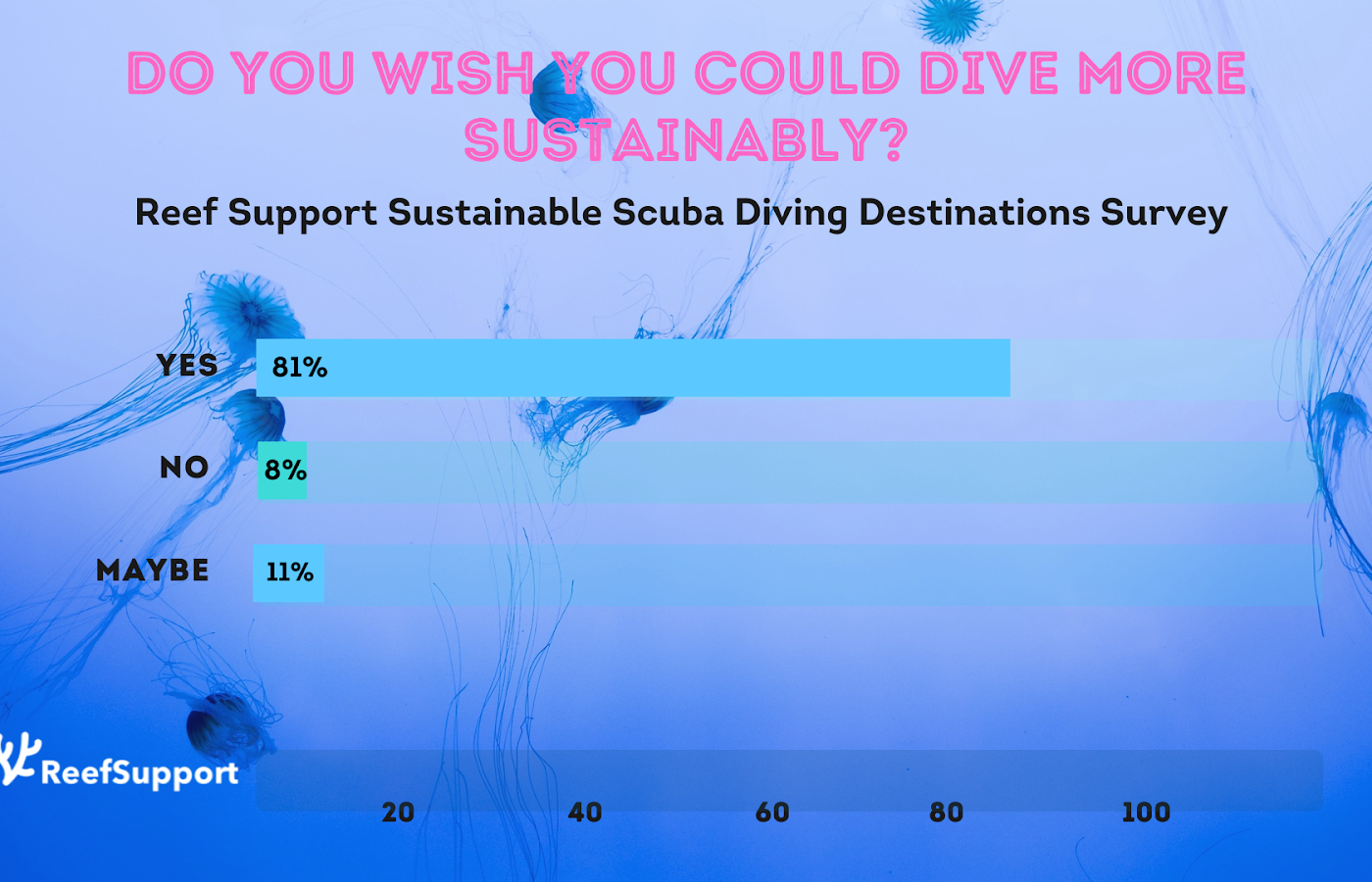
Survey Q1: Do you Wish you could Dive more Sustainably? — (Created by Lily Caramel on Canva Pro)
40% of holidaymakers would like to learn how to restore coral reefs — and 29% want to learn more about the marine environment.
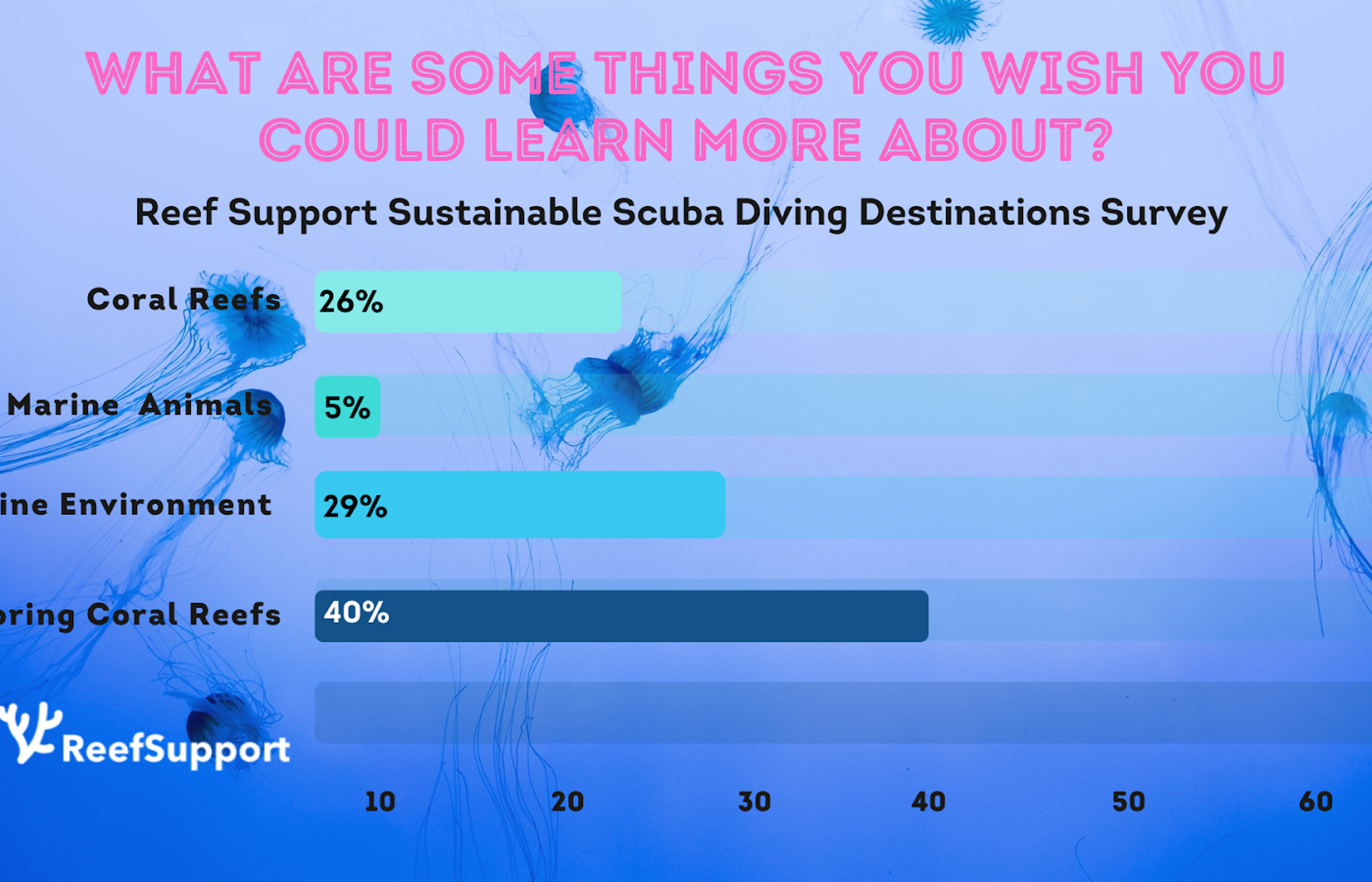
Survey Q2: What are some things you wish you could learn about? — Created by Lily Caramel on Canva Pro
These results show that more people wish to travel sustainably and contribute positively to the environment, specifically engaging in environmentally friendly experiences like coral reef repair.
Reef Support Reef Ranger Sustainable Diving Travel
Reef Support offers adventurous travelers an exciting opportunity to learn how to scuba dive and become a Reef Ranger — a custodian of the oceans, skilled at protecting, monitoring, and restoring coral reefs. Travel to Indonesia, Columbia, South Africa, Madagascar, Australia, or Costa Rica. Areas where exciting and ambitious coral reef restoration projects are launching or in progress — and train to be a citizen scientist scuba diver who takes action, helping to create a better planetary future.
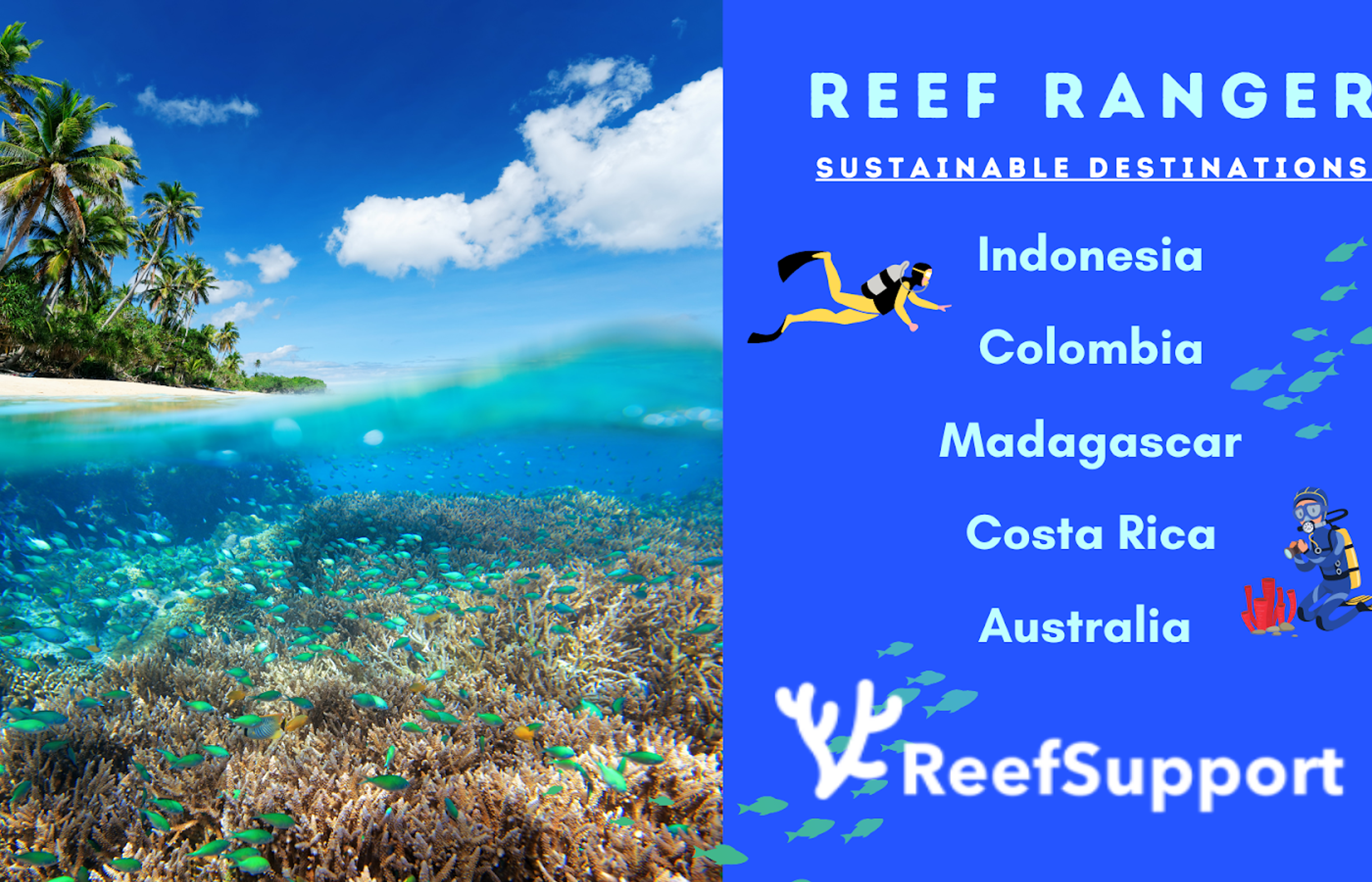
Reef Ranger Sustainable Destinations Reef Support -( Created by Lily Caramel on Canva Pro)
Why is Coral Reef Restoration Important?
- Biodiversity in the Coral Reef Provides Food Security and Supports Livelihoods
Coral reefs are vibrant underwater jungles, providing a home, breeding, and nursing ground for over two million marine plants and animals. And like the Amazon, they are one of the most biodiverse habitats on planet Earth. The myriad of inhabitants includes; fish, turtles, reef sharks, octopi, rays, crustaceans, sponges, eels, turtles, nudibranchs, and more. Reefs harbour a quarter of all known marine species — even though they occupy a tiny fraction of the sea floor.
Coral reef biodiversity supports the lives of over one billion people by sustaining them with food — and providing economic opportunities, of which tourism plays a huge part. Coral reefs are also an abundant source of medicines, aquaculture, and scientific discovery.
Loss of biodiversity in the ocean would be catastrophic for both humankind and animal life because it is the food we eat, it creates the air we breathe, forms our habitat — and ensures planetary well-being.
Why is it Important to Conserve Biodiversity?
Climate change and loss of biodiversity in the ocean are linked. According to the Nature Conservancy, what we do before 2030 will determine whether we can slow down the warming and level it at 1.5 degrees Celsius — a temperature rise that will minimise harm to coral reefs — or not. More heating than that — and our oceans may not survive. Our actions now will safeguard the oceans for generations to come — and protect people, habitats, and wildlife from the disastrous effects of global warming.
- Coral Reefs Protect Coastlines
Coral Reefs protect beaches, especially on low-lying islands and flat coastal areas, from the ravages of violent storms and tsunamis. Without the protective tidal barrier of protection that a coral reef forms, cities, towns, roads, homes, and infrastructure can easily be devastated by hurricanes and cyclones, rendering whole countries destitute.
- Coral Reefs Balance Climate Change Conditions
The coral is alive! A primitive animal in nature, living in large colonies with its clones, hunting for food. Corals have mutually beneficial symbiotic partners that give them their beautiful rainbow colours: single-celled organisms called zooxanthellae that generate energy and oxygen from sunlight. These ancient creatures have been around, sustaining all life on earth — for over 500 million years. Yet, coral reefs could be lost entirely by 2100. It is a grave warning to humankind — and the last chance to regenerate coral reefs is now.
Coral reefs provide us with over 50% of the oxygen we breathe and sink 70 to 90 million tonnes of excess carbon from the atmosphere, balancing climate change conditions. But we have lost over 50% of our reefs in the last 30 years — and stand to lose them all if we don’t take collaborative action fast enough.
How Does Climate Change Affect Coral Reefs?
Corals are facing the devastating challenge of climate change which has raised sea temperatures. Climate change is also responsible for ocean acidification — when pH lowers due to excess carbon absorption. These two factors are the primary cause of coral bleaching — or coral reef death.
The great news is that scientists and organisations are collaborating globally to find ways for coral reef regeneration. Reef Support partners with IntelliReefs, a company that works to regrow coral reefs using innovative technology, and their sister organisation, Reef Life Foundation — to restore, revitalise, and protect coral reefs.
How to Help Repair Coral Reefs:
- Travel Sustainably with Reef Support
Combine eco-awareness and travel to make your scuba diving experience sustainable. Reef Support offers environmentally friendly experiences for sustainable ecotourism in many glorious coral reef locations.
2. Practice Sustainable Scuba Diving
Avoid contact with corals or marine animals with your hands or feet. Don’t interact with marine life — look but don’t touch. Never take anything from the sea but stunning underwater shots and beautiful memories.
3. Never Litter at Sea — or on Land
Avoid single-use plastics and deposit your waste responsibly — wherever you may be. Sea animals, including mammals, reptiles, birds, and fish — all accidentally consume plastic which is harmful to them.
4. Use Reef-Friendly Sun Creams, Beauty, and Cleaning Products:
Many toiletry and body-care brands are responsible for coral death or bleaching. Use environmentally-friendly cleaning products in your home, business, and especially on boats. Remember that wastewater leaving your business or home — ends up in the waterways too.
5. Reduce your Carbon Footprint:
Live sustainably and walk or cycle instead of using a car or public transport as often as you can. Be aware of how much energy your appliances and devices consume — and reduce it. Buy sustainably grown or farmed products — you will be supporting your community and reducing your carbon footprint.
6. Become a Reef Support Reef Ranger:
Reef Rangers are custodians of our oceans trained on location by Reef Support. They learn sustainable scuba diving techniques, how to protect coral reefs, and established scientific methods for regrowing and replanting corals.
Furthermore, they will become independent citizen scientists, contributing to a global database of marine research through Reef Support’s Open Coral AI.
Reef Rangers learn how to monitor reefs and collect data to be uploaded to an open database. And used by scientists to predict future changing marine conditions and provide insights for solutions to saving coral reefs.
Reef CPR eLearning | Coral Reef Restoration with Sustainable Oceans, Australia
Reef Support has partnered with Sustainable Oceans Australia, coral reef restoration experts, and advisors to create an online learning digital eBook for Reef CPR — that teaches scuba divers how to control, prepare, and replant corals.
The course will be free to download — and can be completed before embarking on your Reef Ranger training adventure. Although it is not obligatory preparation, this course is for people interested in how to protect and restore coral reefs.
7. Spread Coral Reef Awareness:
Tell your friends, colleagues, associates, and family. Spread the word about the importance of restoring coral reefs, sustainable scuba diving, and coral reef biodiversity.
The Benefits of Sustainable Tourism for Coral Reef Destinations:
Sustainable tourism means reducing tourism’s negative impact on natural habitats and increasing the positive benefits. The benefits of keeping the most biodiverse habitats healthy are improved global health, economy, and well-being — for all humanity.
Sign up as a Reef Ranger with Reef Support and travel to one of our many tropical destinations to learn about sustainable scuba diving and how to help repair coral reefs.
Explore the mystery, beauty, and incredible biodiversity of coral reef life in a beautiful sunny location — and enjoy an environmentally-friendly learning experience abroad, while becoming a citizen scientist, and taking climate action.