Blog
The Second Reef Ranger: Jaap van den Langenberg
Overview
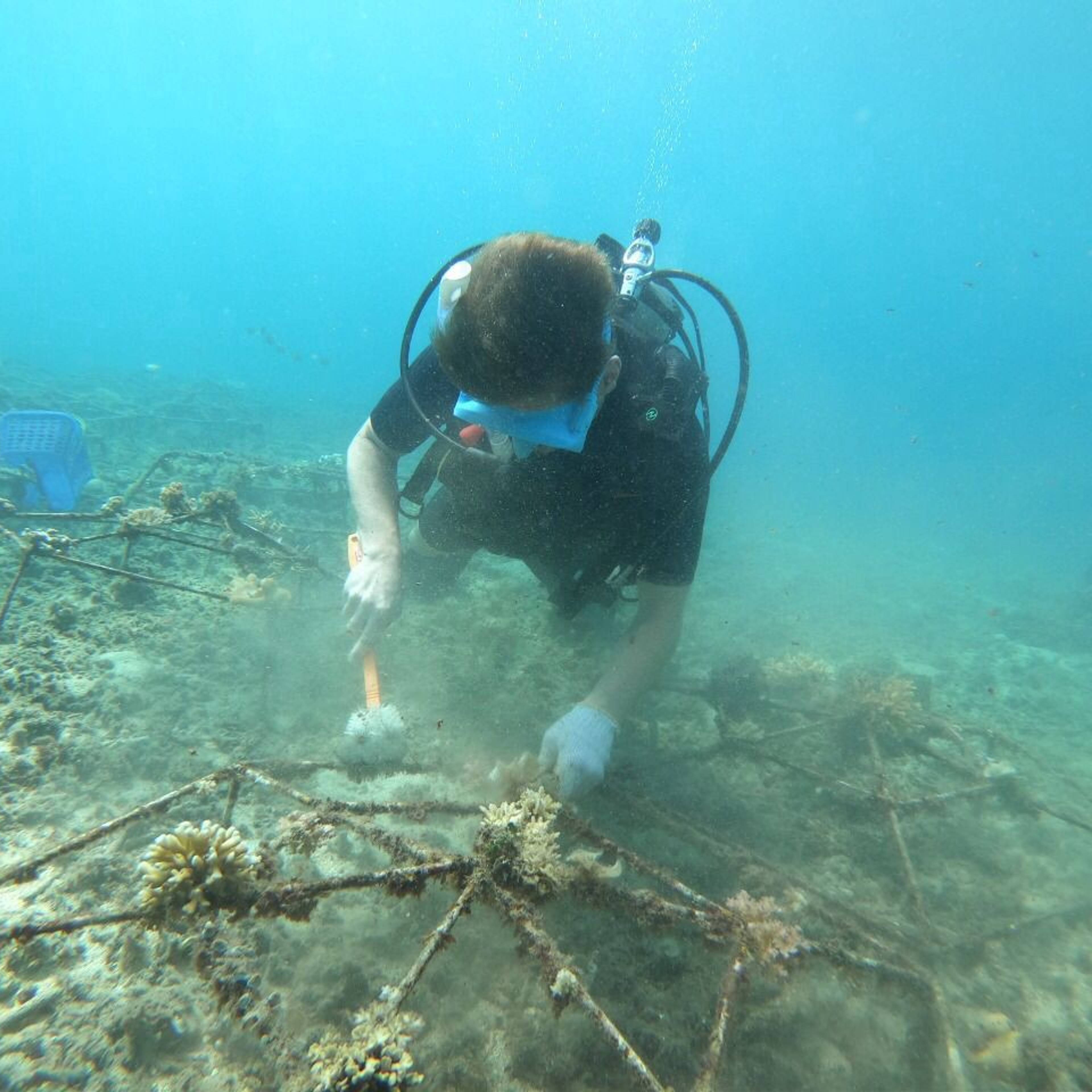
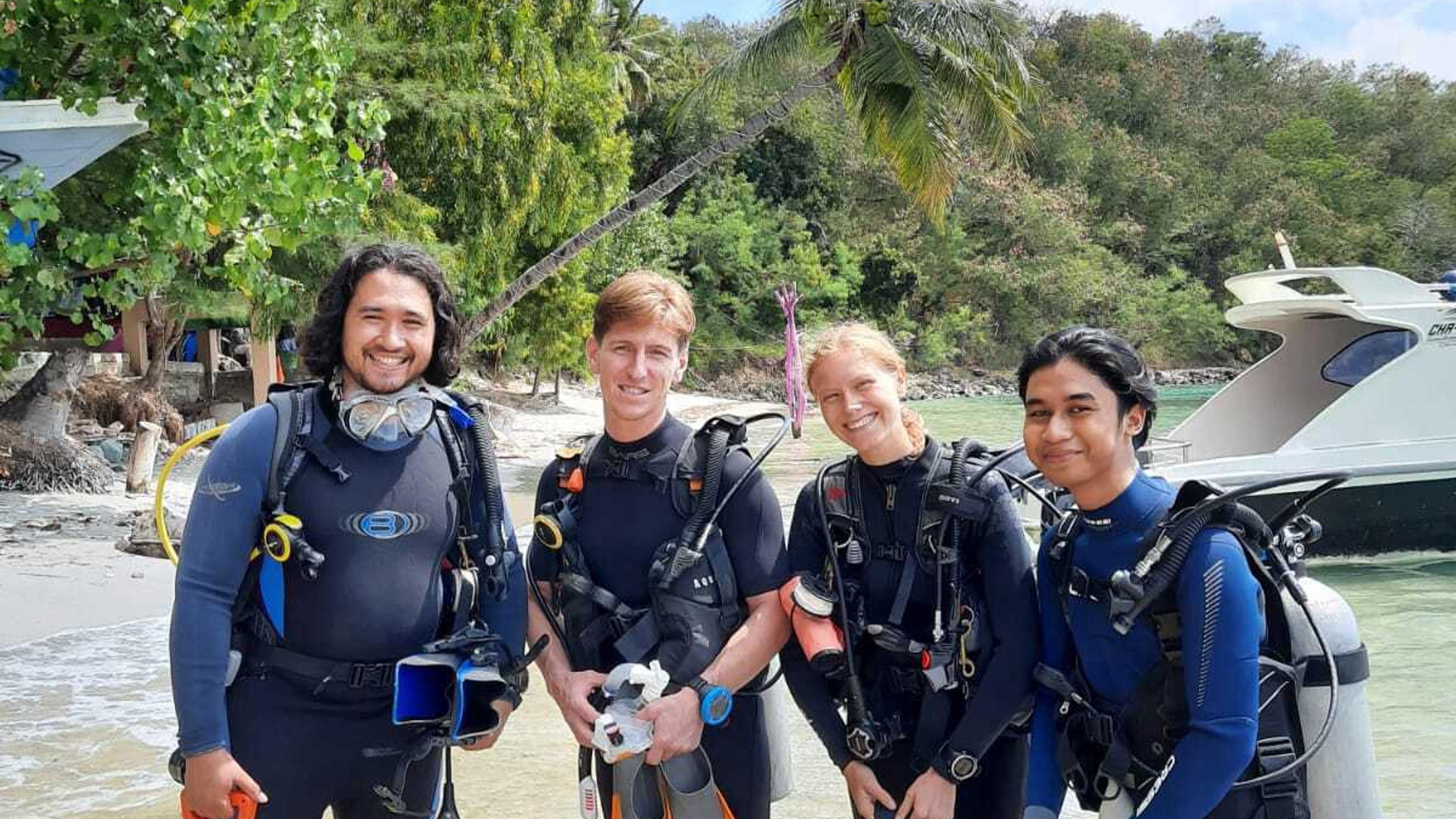
Jaap (Ranger_J) got in touch with us after learning about the Reef Ranger program on coral from a “Regeneration” where people are connected by similar interests, hobbies and job preferences in marine conservation. Reef Support and IBF decided to have Jaap as our second Reef Ranger in Lombok for a short 2 week program, where we provided the necessary intensive training on reef monitoring, restoration and micro fragmentation, which includes maintaining the proper nutrients and minerals in the coral tank water and closely observing the growth of coral, including detecting any signs of bleaching and degradation. All this is to enhance and support the next generation of climate-resistant corals.
Reef Ranger Review (A Self-Biography)
“Hi all, I’m Jaap van den Langenberg from the Netherlands. Currently, I’m living in the city of Nijmegen. I finished my MSc in Spatial Planning with a specialisation in Cities, Water & Climate change in July 2021 at Radboud University. After my graduation, I started working as a junior area development researcher/consultant.
From an early age, I have been committed to nature, I love diving and I am interested in other cultures. I like to do something good, and I want to contribute to preserving the beautiful nature on the planet. Although I did scuba diving, I did not know much about the life and importance of coral reefs; therefore, by signing up for the Reef Ranger Program, I expected to be able to learn something new about the coral reef and its functions, contribute something to nature restoration and learn a new culture by working together with the local people.”
Daily Activities
During my stay, the main tasks were to check the water quality of the tanks with coral and to maintain them with the right nutrients and minerals, to keep the windows of the tanks clean, to clean filters, and observe healthy coral growth. In addition, Alwan, the local intern and senior coral lab technician, and I made the first draft of an infographic with information about the ecosystem of the coral and the functions of different types of coral (see image below). This also contributes to the local conservation organisation with material to share to future Reef Rangers and visitors of the coral lab. Eventually, I also started to help maintain the underwater constructions, like the coral spiders, where the baby fragments from the coral lab are planted, on which the coral reefs of Indonesia can begin to heal itself from.
Besides that, I had fixed tasks to accomplish, but there was still enough time for fun things on Kecinan beach. Before I started my regular tasks which include intensive diving, I decided to get my PADI advanced course certification for Scuba Diving. Because of this, I was busy for the first few days with the theory of diving and training in the (open) water. I have participated in recreational dives with other members and Reef Rangers during the course which made it more enjoyable.
Alwan educated me in the evenings, taking me out to search for aquatic life with a lamp in the shallow section of the water, where I quickly and thoroughly learned about the diversity of aquatic animals. A whole new world opened up for me. I also played football with young people further down the beach and I snorkelled a lot during the day.
Great Time with Locals and Other Activities to be done
I have made friends with the locals because there are so many of them around the lab. I also had the pleasure of being invited by the owner of the Warung on Kecinan beach to join the family at the family home during the EID (Muslim festival). Very nice to experience how they live and how cozy it is in people’s homes. The food tasted just as good as at the Warung. Besides the Nasi I would certainly not forget to try the fish from the grill, it is both very tasty!
Also, outside Kecinan beach, there is a lot to experience. In 20 minutes you are by boat on the tropical Gili islands. Half an hour away by scooter you can easily reach Bengal and Senggigi. Bengal is a town with a lot of regional cuisines, and for western cuisine, you can visit Senggigi, a popular tourist destination. Additionally, I recommend exploring more of Lombok and not missing the difficult but worthwhile hike up Rinjani volcano. In addition, there are waterfalls, traditional villages in Lombok’s south that still employ manual labor, and Kuta, a popular surfing destination.
I have experienced Kecinan beach as a quiet place where you can relax. My expectations have come true. I have learned a lot about coral reefs and aquatic life partly because of Alwan and people who were involved with the local organization, I have discovered and embraced the culture and the language, and I have been able to do something good for nature and the local population.
Overall
What I enjoyed most was getting in touch with the local people, discovering the food and of course, the aquatic life. In more popular and commercialised cities like Jakarta, it is difficult to fully experience the real local culture of Indonesia, which is why being in place like the island of Lombok, where not everyone speaks English, is a great way to quickly learn about culture, the people and the food, which is one great thing outcome of being a Reef Ranger.